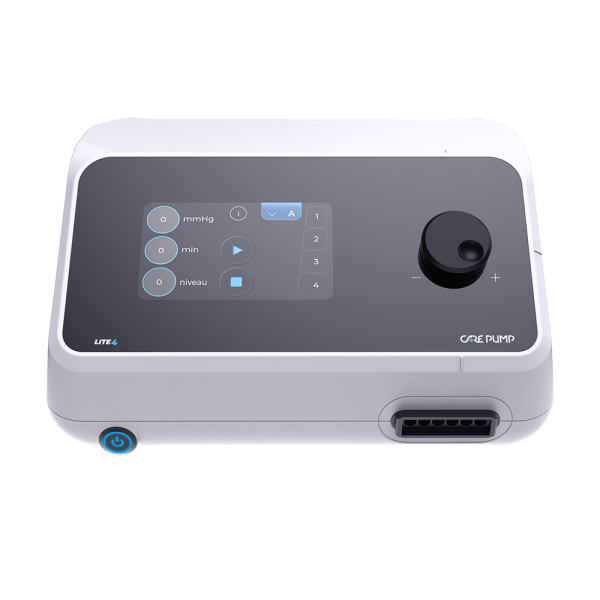
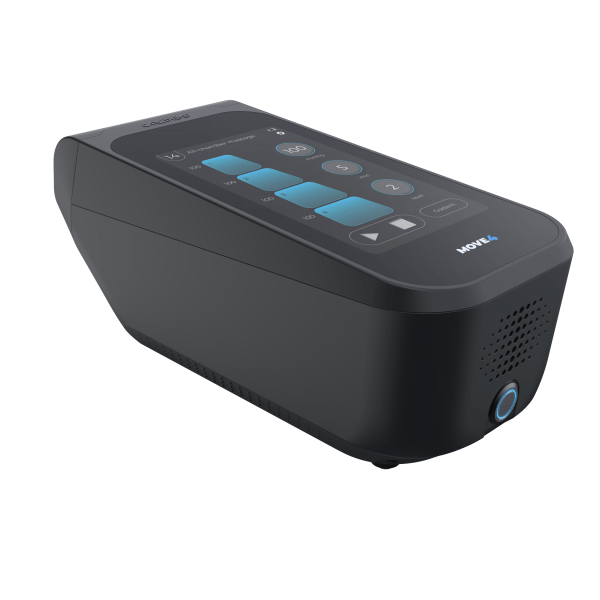
Pneumatic compression therapy, also known as pressotherapy, intermittent pneumatic compression or mechanical lymphatic drainage, uses air-filled cuffs to apply rhythmic, directional pressure to part of the body. It works in a similar way to a manual lymphatic drainage massage.
How it works
A pressotherapy system has three parts:
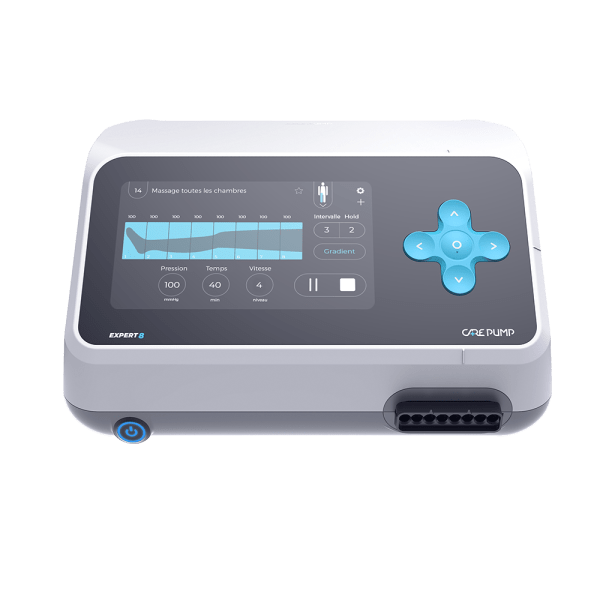
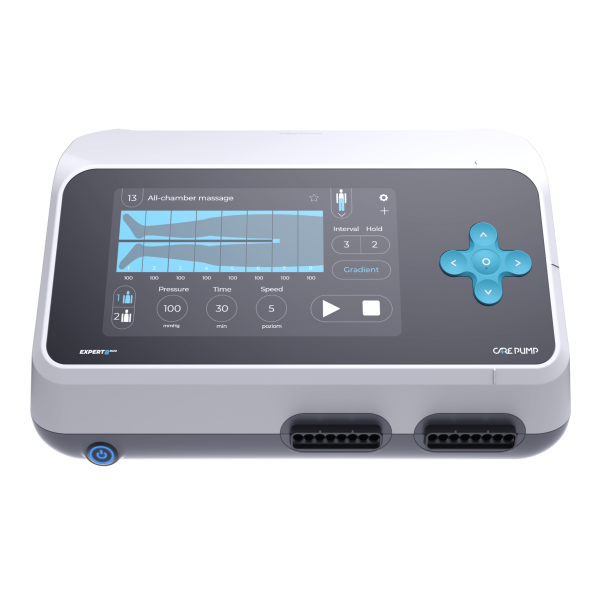
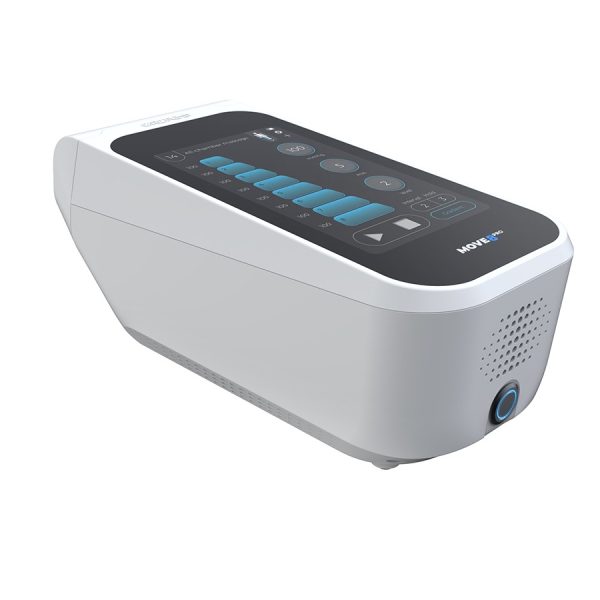
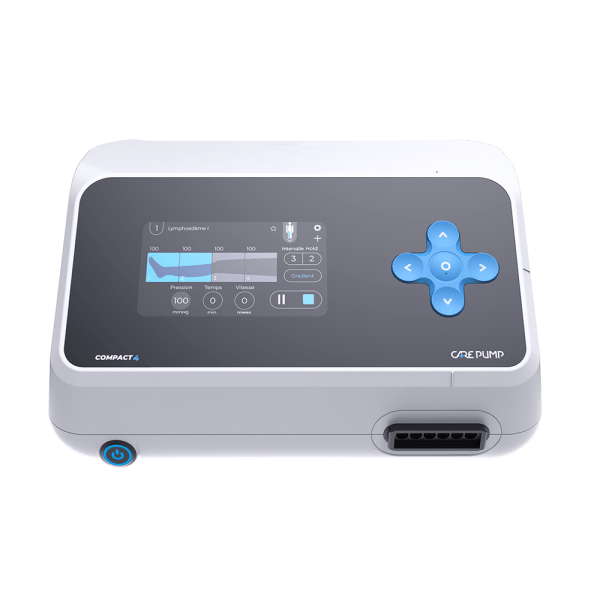
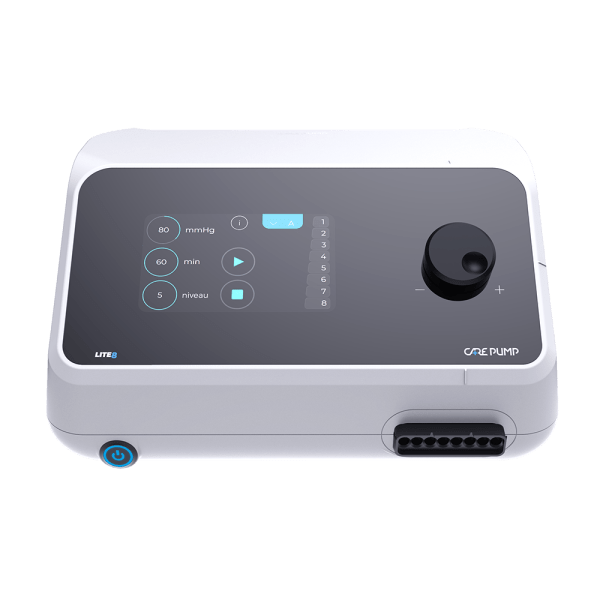
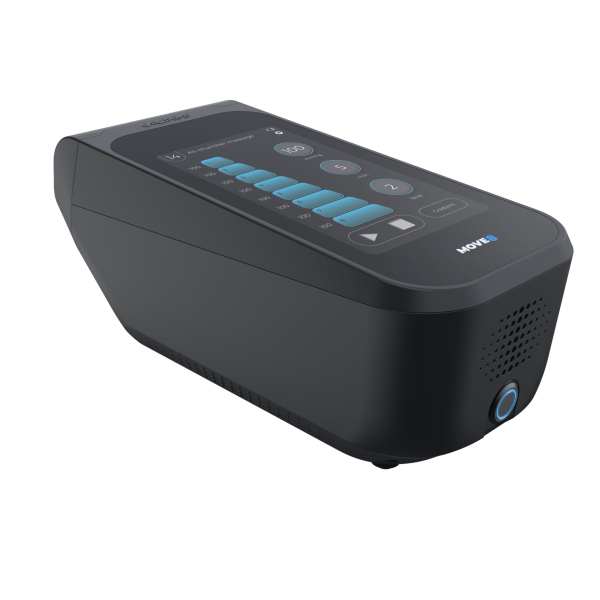
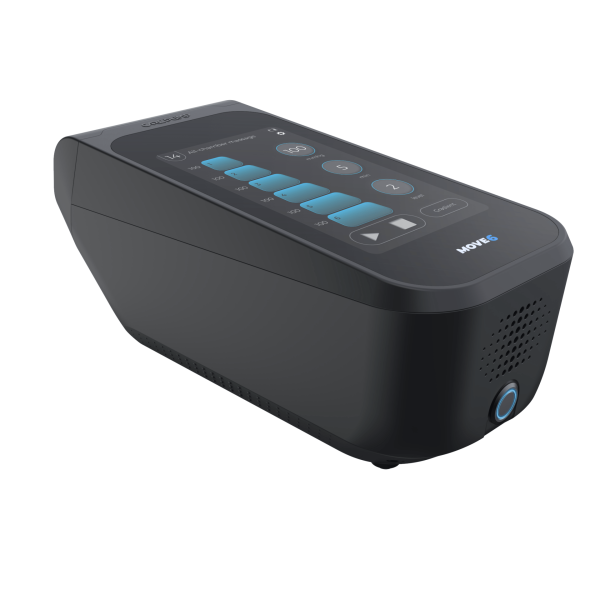
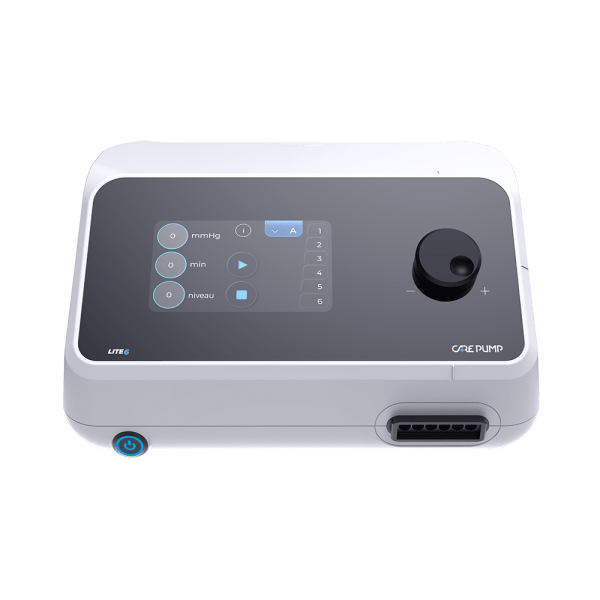
- The central unit, which holds the compressor and is where you set the program, pressure, time and speed.
- Air tubes, which carry air from the unit to each chamber of the cuff through separate channels.
- The cuff, worn on the legs, arms, waist or hips. Each cuff is divided into several chambers.
During a session the chambers inflate one after another, usually starting at the hand or foot and moving towards the body. This creates a wave of pressure that pushes fluid out of the limb. CarePump cuffs use an overlapping chamber design, so each chamber slightly overlaps the next. This helps stop fluid flowing back while the treatment runs.
What it is used for
According to the CarePump manuals and the Polish Society of Lymphology guide, pressotherapy is used for:
- reducing swelling (oedema), including lymphoedema, venous oedema and lipoedema, under professional guidance
- recovery of tired and sore muscles after training or competition
- the feeling of heavy legs, for example after long periods of sitting or standing
- relaxation and general well-being
- cellulite and improved skin elasticity
The right program and pressure depend on the condition being treated. The therapy programs guide explains the programs built into CarePump devices.
What a session looks like
- Sessions are usually done lying on your back with your head slightly raised, or sitting with the arm supported when treating an arm. The treated limb should not hang down.
- Wear thin, non-restrictive clothing under the cuffs, and remove jewellery and watches first.
- The Polish Society of Lymphology recommends that the first session uses a pressure no higher than your current diastolic blood pressure, measured on the limb being treated. Pressure can be increased in later sessions only if the previous one was well tolerated.
- The CarePump manuals say pressotherapy can be done every day. Your therapist will advise how often and how long for you.
Is it safe for me?
Pressotherapy is not suitable for everyone. Read pressotherapy safety and contraindications before you start. Before buying or using a pressotherapy device, check with your doctor or physiotherapist that it is right for you. They can also advise which cuffs, programs and pressure settings to use.